
27th Prime Minister’s Science, Technology & Innovation Advisory Council (PM-STIAC) Meeting Discusses Cell and Gene Therapy in India
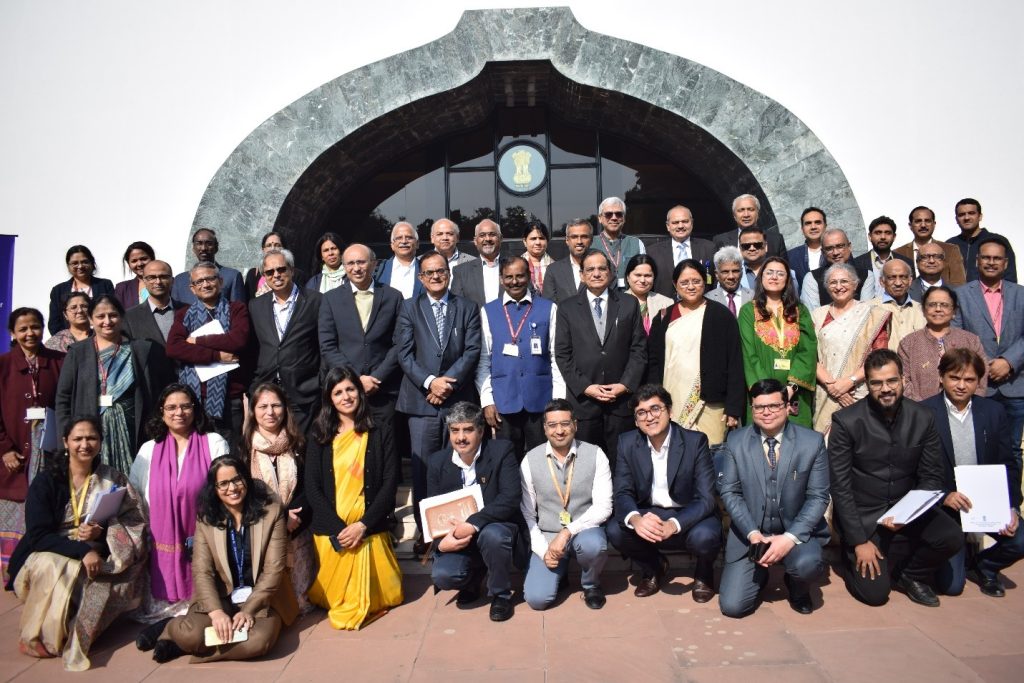
Delhi, Jan 21
27th meeting of Prime Ministers’s Science, Technology & Innovation Advisory Council (PM-STIAC) was convened today, 21st January 2025 under the chairmanship of Principal Scientific Adviser to the Government of India, Prof. Ajay Kumar Sood at Vigyan Bhawan.
Along with the PM-STIAC members, the meeting brought together key government officials industry players, health professionals and academicians to discuss Cell and Gene Therapy in India.
Member (Health) NITI Aayog Dr. VK Paul; Scientific Secretary at the Office of Principal Scientific Advisor to Government of India Dr. Parvinder Maini; Secretary, Department of Biotechnology Dr. Rajesh S. Gokhale; Secretary, Department of Health Research Dr. Rajiv Bahl; Secretary, Department of Defence R&D and Chairman, DRDO Dr. Samir V. Kamat; Secretary, Department of Space Dr. V. Narayanan; Secretary, Department of Atomic Energy Dr. Ajit Kumar Mohanty, and Secretary, Department of Science and Technology Prof. Abhay Karandikar also joined the meeting.
In his opening address, Prof. Sood emphasized that approximately 70 million people in India suffer from rare diseases, with 80% of these being genetic in nature. He pointed out the significant disease burden in the country, which includes a rise in cancer cases. Prof. Sood highlighted the immense potential of Cell and Gene Therapy (CGT) to meet these critical medical needs. He noted that advancements like the Genome India Project uniquely position India to lead in personalized gene therapies. Building on the successes of CAR-T cell therapy and gene therapy for Hemophilia, Prof. Sood mentioned that efforts could result in affordable and accessible healthcare. Effective implementation requires collaboration among government, healthcare providers, researchers, and industry, along with a holistic program to address costs, regulations, infrastructure, and public perception.
Dr. VK Paul, Member NITI Aayog, emphasized the urgent need for India to accelerate progress in CGT. He highlighted the importance of synergizing efforts between academia and industry, with strong support from the government. Dr. Paul discussed the encouraging success rates of CGT compared to conventional treatment methods. He asserted that through collaboration between the government, industry, start-ups, regulators, and academia, CGT treatments can be made more affordable and accessible.
The first session of the presentations showcased the initiatives, advancements, and programs of the Department of Biotechnology, the Council of Scientific and Industrial Research (CSIR), the Indian Council of Medical Research (ICMR), and the Department of Pharmaceuticals in the development of Cell and Gene Therapies.
Dr. Rahul Purwar from IIT Bombay and Dr. Alok Srivastava from St. John’s Hospital in Bengaluru shared their insights on the development of India’s first indigenous CAR-T therapy and gene therapy for Hemophilia, respectively.
Industry presentations from Immuneel Therapeutics, Micro CRISPR, Laurus Labs Ltd., and INTAS Pharma showcased the industry’s work in CGT. Additionally, presentations emphasized the need for regulatory reforms, indigenization of raw materials, enhanced infrastructure for clinical trials and research, and capacity-building efforts to develop skilled human resources to meet industry demands.
Dr. Rajeev Raghuvanshi, the Drugs Controller General of India (DCGI), presented the existing guidance for CGT drug development and current regulatory framework. He emphasized the ongoing reforms aimed at enhancing the approval process, including digitization to streamline procedures, strengthening the Scientific Expert Committees (SEC), and building capacity to advance CGT while upholding stringent safety standards.
After the presentations, the Chair invited interventions from special invitees who echoed the suggestions and findings of speakers.
PM-STIAC members emphasized the broad potential of Cell and Gene Therapy (CGT) in treating various disorders, including cancer. They highlighted the need for a national mission on CGT to drive advancements in the field. Discussions included the creation of a centralized database to compile information on efforts, resources, and disease data, aiding in prioritizing diseases relevant to the Indian context. It was also suggested to establish CGT clinics colocalized with government hospitals to improve trial accessibility. To promote industry participation and commercialization, measures for industry incentivization were proposed. The importance of Centers of Excellence was stressed to foster innovation and build capacity along with ensuring affordability and accessibility for the country’s healthcare needs and priorities.
Dr. Paul summarized the discussion by identifying key actions required to enhance the nation’s capability in CGT products. He emphasized the need for technology sharing and transfer from academia to industry and in complementing the capabilities of stakeholders in product development. Additionally, he highlighted the importance of ensuring access and affordability through cost-effective analysis. Dr. Paul also underscored the necessity of securing funds to drive these efforts forward.
In his concluding remarks, Prof. Sood reiterated the suggestions of participants including the importance of adopting a mission-mode approach to advance CGT in India. He emphasized that this approach is crucial for indigenizing all aspects of the CGT supply chain and developing new technologies. He highlighted the crucial role of CDSCO and ongoing efforts in streamlining the regulatory processes for CGTs. Additionally, Prof. Sood underscored the need for a centralized dashboard to foster synergy among all relevant stakeholders. As a way forward, he recommended creating a comprehensive mission document by ICMR in consultation with DBT and other agencies to prepare the roadmap for cell and gene therapy.